
Reserve Bank of India (RBI) deputy governor M Rajeshwar Rao on Wednesday defended the central bank's decision of not allowing industrial houses to float banks, and said more deliberations are needed before RBI changes its stance on this issue agreed back in 2001. An internal working group (IWG) of the RBI had recommended allowing industrial groups into banking, but late last month the RBI said it kept on hold the two recommendations of allowing industrial houses and large non-banks to float banks. However, RBI had accepted 21 of the 33 recommendations of the group that submitted its report a year ago.

The draft amalgamation scheme of Punjab and Maharashtra Co-operative (PMC) Bank with Unity Small Finance Bank (SFB) allowed quick relief to depositors with savings of up to Rs 5 lakh, but a long wait for those who had their nest egg with the scam-tainted bank. If the scheme gets approved, 96 per cent (or 880,000 of 924,000) depositors will get their full money straightaway after PMC is merged with Unity SFB. According to the draft scheme, retail investors may get up to Rs 5 lakh from the Deposit Insurance and Credit Guarantee Corporation (DICGC) instantly, and then some more in phases till they can recall their full deposits after 10 years.

The Reserve Bank of India's retail direct scheme is off to a good start but the central bank itself sees it as an additional avenue and not an alternative to the existing one. Still, a reasonable expectation is to have at least 100,000 investors within a month of it being operational, and that could be well under way, if the latest trend is to sustain. The registration in the retail direct platform has crossed 35,000.

'I hope the trend is sustainable and that economic activity accelerates going forward.'

The Reserve Bank of India (RBI) unions have decided to intensify their stir demanding revision of wages, pending since November 2017, and have called for mass casual leave of employees at the central bank on November 30. However, several sources in the RBI told Business Standard that the unions may not have to go on agitation, as the new contours of the wage pact have been almost finalised and could be announced any time. An email sent to the RBI was not answered. The United Forum of Reserve Bank Officers and Employees had deferred its agitation earlier after it was told that RBI Governor Shaktikanta Das was to hold talks with the human resource management department (HRMD).

Rapid strides in digital payments notwithstanding, the Indian economy will likely remain cash-dependent for many years to come, at least that's what the automated teller machine makers and cash logistics companies are betting on. After growing at over 20 per cent for most of 2020, currency in circulation growth fell to 8.5 per cent as of October 29 this year, shows data from the Reserve Bank of India (RBI). The reason for the steep rise in currency last year was the uncertainties related to the Coronavirus (Covid-19) pandemic, where people preferred to hoard cash to meet exigencies.

Prime Minister Narendra Modi will on Friday launch two schemes of the Reserve Bank of India (RBI) that may go a long way in changing how the household sector invests, and complains if anything goes wrong with their savings. These schemes - retail direct and an integrated ombudsman - will be launched by the Prime Minister virtually, in the presence of Finance Minister Nirmala Sitharaman. With the introduction of retail direct, a common man can directly take a position in government securities (G-Sec), considered to be the safest asset class a sovereign can offer.

'Rather than experimenting with CBDCs, we must come up with a very simple and straight design.' 'Dematerialise your currency/cash and with that dematerialised rupee allow all the transactions digitally.'

The Insurance Regulatory Development Authority of India (Irdai), the regulator for insurance companies, is set to allow the insurers to offer wellness programmes along with life insurance policies that can earn reward points for the policyholders. These reward points can be redeemed for getting a discount during renewal. The insurance regulator has circulated draft guidelines to insurance companies for feedback before issuing the final guidelines, as is the norm.

Nearly two million e-mandates for recurring payments have been registered with banks and card networks after the Reserve Bank of India (RBI) made it mandatory from October 1 to take prior consent of a customer before debiting her account, sources in know of the matter said. Industry estimates peg the recurring transactions at approximately 2.5 per cent of the total volume of transactions, and about 1.5 per cent in terms of value. Of these, around 75 per cent of domestic recurring transactions, and about 85 per cent international recurring payments are below Rs 5,000.

A lot depends on how Srei shapes up under the new administrator and his team, which is critical for investors' interest.

'But we are much better than what we all had expected and planned, and what all the prophets of doom had predicted.'

Term insurance policy premiums are set to rise by 25 to 30 per cent with Munich Re, the largest reinsurer for the Indian insurance market, increasing its rates for underwriting portfolios of pure protection plans by up to 40 per cent. According to a senior executive of a private life insurance company, the global reinsurer has communicated its decision about increasing rates. About 8-10 insurance companies have been informed about the move, sources said.

The recent Reserve Bank of India (RBI) norms on tokenisation services, which will be offered by card networks, are likely to result in merchants and payment aggregators incurring a cost as they have to pay a fee to the networks. The merchants and the payment aggregators, in turn, may pass on the cost to the customers. The norms, which were issued by the banking regulator released on September 7, allow card networks like Visa and Mastercard to offer the tokenisation service.
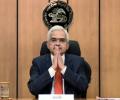
'Even if there is a third wave or a fourth wave, it is hard to see the economy will suffer like that (during the first wave).'

'Spends are likely to increase from the current levels because recovery is yet to fully be over.'

'People know if inflation is not within the tolerance band, then action will be taken so they do not expect inflation to rise above that.'

The payments industry is at a crossroads with the banking regulator on two pressing issues, neither of which seems headed towards an amicable solution. Depending upon which side accommodates the other, customers in India will have to choose between convenience and ironclad safety. In the end, the Reserve Bank of India (RBI), which regulates both banks and all payments services providers, will prevail. But the question is: will it do so by bending a little or by sticking to its firm stand? The two issues - one concerning payment facilitators storing customers' card details and the other about auto-renewal of payments - appear similar but aren't.

The talk of governance reforms at public-sector banks seems to remain on paper, as a majority of them continue to be working with just a handful board members. Half of the board seat at these banks have been vacant. Ten of the 12 public-sector banks, even large ones like Punjab National Bank, Canara Bank and Union Bank of India - all except State Bank of India (SBI) and Bank of Baroda - don't even have a chairman. In 2014, while splitting the post of chairman & managing director (CMD), the government had decided to appoint non-executive chairmen at these banks. SBI, which has an executive chairman and four managing directors, was an exception.
The Reserve Bank of India (RBI) on Wednesday gave banks time till October 31 to comply with its guidelines on current account and overdraft facilities. The central bank indicated that it was in no mood to change the proposed rules, but would only allow for stretching the timeline for smoother implementation. The initial deadline had ended on July 31, leading to thousands of current accounts being closed or frozen by banks. Lenders had requested the RBI for some more time to resolve the operational issues in implementing the provisions of the August 2020 circular in letter and spirit.
 © 2025 Rediff.com - Investor Information - Advertise with us - Disclaimer - Privacy Policy - Sitemap - Feedback - About us - Terms of use - Grievances